certified-mulesoft-developer-ii Salesforce Certified MuleSoft Developer II Practice Questions
Prepare for certified-mulesoft-developer-ii with more than an answer.
Unlock the full exam and previous versions
- v1Salesforce Certified MuleSoft Developer II 180 questions Locked
- certified-mulesoft-developer-iiLegacy Salesforce Certified MuleSoft Developer II 34 questions Current
- Exam fee
- $200 USD
- Level
- Advanced
- Valid for
- Requires annual maintenance
Domains covered on the exam 5
- Expose production-ready Anypoint Platform-managed APIs from Mule applications13%
- Implement maintainable and modular Mule applications and their Maven builds25%
- Implement monitorable Mule applications15%
- Implement performant and reliable Mule applications27%
- Secure data at rest and in transit20%
- 1
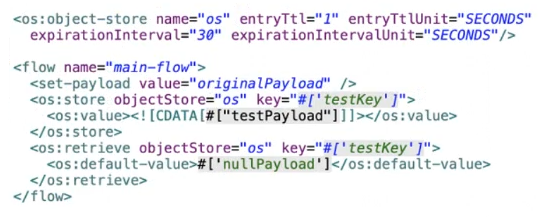
Refer to the exhibit.A Mule Object Store is configured with an entry TTL of one second and an expiration interval of 30 seconds.What is the result of the flow if processing between os:store and os:retrieve takes 10 seconds? A.originalPayloadB.OS:KEY_NOT_FOUNDC.testPayloadD.nullPayload
Show answer details
Correct answer: D
- 2
A Mule API is designed to retrieve product catalog information. The backend system that holds this data is slow, and the data only changes once every 24 hours during a nightly batch update. The API is deployed to three CloudHub workers and receives a high volume of requests for the same product data repeatedly. The primary goals are to dramatically improve API response time and reduce the load on the legacy backend. Which caching strategy should be implemented to meet these requirements effectively?
graph TD subgraph CloudHub VPC LB[Load Balancer] --> W1[Worker 1] LB --> W2[Worker 2] LB --> W3[Worker 3] end subgraph Backend LegacyDB[(Legacy DB)] end W1 -->|Cache Miss| LegacyDB W2 -->|Cache Miss| LegacyDB W3 -->|Cache Miss| LegacyDB W1 SharedCache[(Shared Cache)] W2 SharedCache W3 SharedCache Client((Client)) --> LBShow answer details
Correct answer: B
Object Store v2 provides a distributed, shared cache that is accessible by all workers in a CloudHub deployment. By configuring the Cache scope to use a persistent Object Store, a product's data will be fetched from the backend only once. Subsequent requests for that same product, regardless of which worker receives the request, will be served from the shared cache, meeting all requirements for performance improvement and load reduction.
