DP-201 Designing an Azure Data Solution Practice Questions
Prepare for DP-201 with more than an answer.
Unlock the full exam and previous versions
- v1Version 1 167 questions Locked
- DP-201Legacy Designing an Azure Data Solution 74 questions Current
- DP-203Legacy Data Engineering on Microsoft Azure 61 questions Locked
- 1
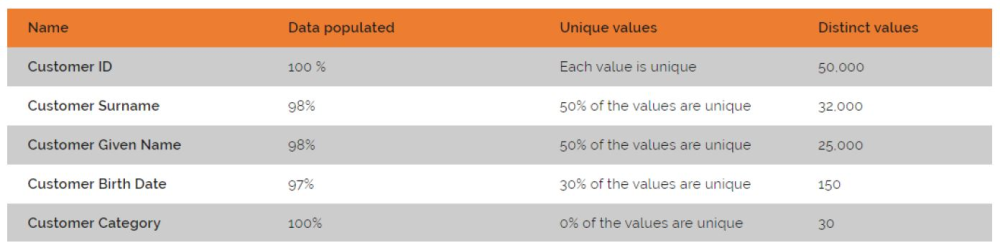
A company currently stores data about its customers. The different properties of the customer data are shown below:
The data is going to be stored in an Azure Cosmos DB container. The queries on the data will be filtered by using the Customer Category and the Customer Surname.
Which of the following would you use as the Partition Key?
Show answer details
Correct answer: D
Explanation:
We have to choose the partition key which will be used as part of the queries and that which has all the values in place. Hence, we can use the Customer Category as the partition key.
The Microsoft documentation mentions the following:
Choosing a partition key
The following is a good guidance for choosing a partition key: • A single logical partition has an upper limit of 10 GB of storage. • Azure Cosmos containers have a minimum throughput of 400 request units per second (RU/s).
When throughput is provisioned on a database, minimum RUs per container is 100 request units per second (RU/s). Requests to the same partition key can't exceed the throughput that's allocated to a partition. If requests exceed the allocated throughput, requests are rate-limited. So, it's important to pick a partition key that doesn't result in "hot spots" within your application. • Choose a partition key that has a wide range of values and access patterns that are evenly spread across logical partitions. This helps spread the data and the activity in your container across the set of logical partitions, so that resources for data storage and throughput can be distributed across the logical partitions. • Choose a partition key that spreads the workload evenly across all partitions and evenly over time. Your choice of partition key should balance the need for efficient partition queries and transactions against the goal of distributing items across multiple partitions to achieve scalability. • Candidates for partition keys might include properties that appear frequently as a filter in your queries. Queries can be efficiently routed by including the partition key in the filter predicate.
Since this is the ideal candidate for the partition key, all other options are incorrect -- Reference:
https://docs.microsoft.com/en-us/azure/cosmos-db/partitioning-overview - 2
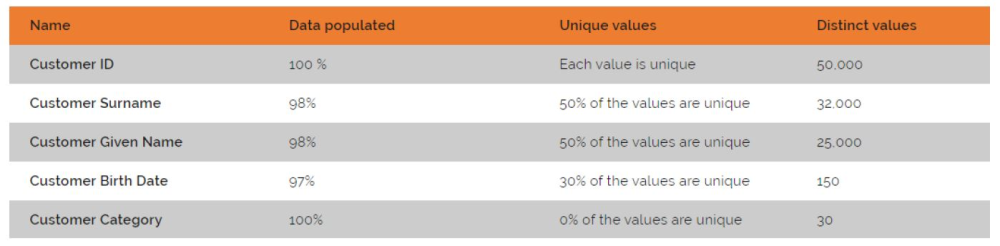
A company currently stores data about its customers. The different properties of the customer data are shown below:
The data is going to be stored in an Azure Cosmos DB container. The queries on the data will be filtered by using the Customer Category and the Customer Surname.
Which of the following would you use as the Item ID?
Show answer details
Correct answer: A
Explanation:
Since we have all of the values of the Customer ID and each value is unique, we can use this as the Item ID of the container.
The Microsoft documentation mentions the following: In addition to a partition key that determines the item's logical partition, each item in a container has an item ID (unique within a logical partition). Combining the partition key and the item ID creates the item's index, which uniquely identifies the item.
Since this is the ideal candidate for the Item ID, all other options are incorrect -- Reference:
https://docs.microsoft.com/en-us/azure/cosmos-db/partitioning-overview - 3
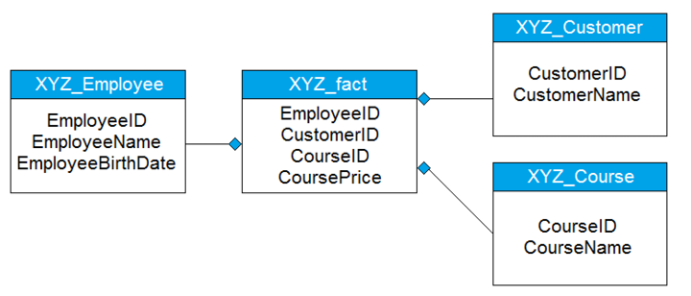
A company is planning on implementing an Azure data warehousing solution. A snippet of the tables in the data warehouse is shown below:
All dimension tables will be less than 4 GB after compression. The fact table will be approximately 5 TB. You have to decide on the underlying table type for each table.
Which of the following would you use as the underlying table type for the XYZ_employee table?
Show answer details
Correct answer: C
C
- 4
Your company wants to setup an Azure SQL data warehouse. Data would be loaded weekly from an Azure SQL database instance.
You have to advise on recommendations based on the following security requirements for the data warehouse:
You have to ensure data engineers can only connect from their on-premise workstations
You have to ensure the right authentication and authorization measures are put in place
You have to ensure the data is encrypted at rest
Which of the following would you recommend for the requirement?
“You have to ensure the data is encrypted at rest”
Show answer details
Correct answer: B
Explanation:
You can use Transparent Data Encryption to encrypt the data at rest The Microsoft documentation mentions the following:
Encryption
Azure SQL Data Warehouse Transparent Data Encryption (TDE) helps protect against the threat of malicious activity by encrypting and decrypting your data at rest. When you encrypt your database, associated backups and transaction log files are encrypted without requiring any changes to your applications. TDE encrypts the storage of an entire database by using a symmetric key called the database encryption key.
In SQL Database, the database encryption key is protected by a built-in server certificate. The built-in server certificate is unique for each SQL Database server. Microsoft automatically rotates these certificates at least every 90 days. The encryption algorithm used by SQL Data Warehouse is AES-256. For a general description of TDE, see Transparent Data Encryption.
You can encrypt your database using the Azure portal or T-SQL.
Since this is clearly mentioned in the Microsoft documentation, all other options are incorrect -- Reference:
https://docs.microsoft.com/en-us/azure/sql-data-warehouse/sql-data-warehouse-overview- manage-security - 5
A company has an Azure Data Lake Storage Gen 2 account that is used to store data used by data engineers. The data engineers would query the data by using notebooks from Azure Databricks. The folders in the Data Lake storage account would be secured by ensuring that users only have access for the folders they require.
Which of the following would you use as the authentication method for Azure Databricks?
Show answer details
Correct answer: C
Explanation:
To authenticate, you can use personal access tokens.
The Microsoft documentation mentions the following:
Authentication To authenticate and access Databricks REST APIs, you use personal access tokens. Tokens are similar to passwords; you should treat them with care. Tokens expire and can be revoked.
Requirements
Token-based authentication is enabled by default for all Azure Databricks accounts launched after January 2018. If it is disabled, your administrator must enable it before you can perform the tasks described in this article. See Enable Token-based Authentication.
Since this is clearly mentioned in the Microsoft documentation, all other options are incorrect -- Reference:
https://docs.microsoft.com/en-us/azure/databricks/dev-tools/api/latest/authentication - 6
A company has an Azure Data Lake Storage Gen 2 account that is used to store data used by data engineers. The data engineers would query the data by using notebooks from Azure databricks. The folders in the Data Lake storage account would be secured by ensuring that users only have access for the folders they require.
Which of the following would you use as the authentication method for Data Lake storage?
Show answer details
Correct answer: A
Explanation:
You can authenticate to Azure Data Lake from Azure Databricks using Azure AD credentials The Microsoft documentation mentions the following: Authenticate to Azure Data Lake Storage using Azure Active Directory Credentials You can authenticate automatically to Azure Data Lake Storage Gen1 and Azure Data Lake Storage Gen2 from Azure Databricks clusters using the same Azure Active Directory (Azure AD) identity that you use to log into Azure Databricks. When you enable your cluster for Azure Data Lake Storage credential passthrough, commands that you run on that cluster can read and write data in Azure Data Lake Storage without requiring you to configure service principal credentials for access to storage.
Since this is clearly mentioned in the Microsoft documentation, all other options are incorrect -- Reference:
https://docs.microsoft.com/en-us/azure/databricks/data/data-sources/azure/adls-passthrough
