HPE6-A72 Aruba Certified Switching Associate (ACSA) Practice Questions
Prepare for HPE6-A72 with more than an answer.
Unlock the full exam and previous versions
- v1HPE Aruba Networking Certified Associate - Switching 165 questions Locked
- HPE6-A41Legacy Applying Aruba Switching Fundamentals for Mobility (ACSA) 123 questions Locked
- HPE6-A69Legacy Aruba Certified Switching Expert (ACSX) 255 questions Locked
- HPE6-A72Legacy Aruba Certified Switching Associate (ACSA) 157 questions Current
- HPE6-A73Legacy Aruba Certified Switching Professional (ACSP) 158 questions Locked
- Exam fee
- $260 USD
- Level
- Associate
- Valid for
- 3 years
Domains covered on the exam 6
- Fundamental Networking Designs & Technologies23%
- Aruba Products & Solutions17%
- System Installation & Configuration27%
- Optimization & Enhancement13%
- Troubleshooting & Repair12%
- Management, Monitoring & Operations8%
- 1
Refer to the diagram below. A network engineer is configuring OSPF on Switch A. The goal is to establish an adjacency with Switch B. Both switches are in Area 0. Switch A has the IP 10.1.1.1/30 and Switch B has 10.1.1.2/30. The ping test between them is successful. However, OSPF remains in the 'INIT' state. What is the most likely configuration mismatch causing this?
graph LR SwA[Switch A 10.1.1.1/30] -- OSPF Area 0 --> SwB[Switch B 10.1.1.2/30] style SwA fill:#f9f,stroke:#333,stroke-width:2px style SwB fill:#ccf,stroke:#333,stroke-width:2pxShow answer details
Correct answer: D
In OSPF, Hello and Dead intervals must match exactly for neighbors to form a Full adjacency. If they mismatch, the switches might see each other's Hello packets (entering INIT state) but will refuse to proceed to 2-WAY or EXSTART because the parameters in the Hello packet do not agree.
- 2
CASE STUDY:
Company Background
TechGlobal Inc. is upgrading its campus network to use Aruba CX switches. The company has a strict security policy requiring that all user access ports must authenticate devices before allowing network access. They use a ClearPass Policy Manager server (10.10.10.15) for authentication.Current Situation
The network admin has deployed CX 6300 switches at the access layer. They have configured the RADIUS server globally. Now they need to configure the ports for 802.1X authentication.Requirements
- Enable 802.1X on interface 1/1/1.
- Ensure that if the RADIUS server is unreachable, the port attempts to authenticate using a local user database as a fallback.
- Limit the port to one authenticated client at a time.
Question
Which sequence of commands correctly applies the 802.1X configuration to interface 1/1/1 to meet the requirements?Show answer details
Correct answer: D
The correct command structure for AOS-CX port access involves entering the interface context and enabling 'aaa authentication port-access dot1x authenticator'. The 'enable' command activates it, and 'client-limit 1' restricts the number of clients. Note: The fallback requirement would be handled by a separate 'aaa authentication port-access dot1x authenticator' profile or global fallback config, but among the options, this is the only one correctly activating 802.1X on the interface context.
- 3
Which command allows an administrator to define a specific text string that describes the purpose of a VLAN, such as 'VoIP_Users'?
Show answer details
Correct answer: C
Inside the VLAN context (e.g., 'vlan 10'), the command 'name ' is used to assign a descriptive name to the VLAN.
- 4
What is the primary function of the Network Analytics Engine (NAE) in ArubaOS-CX switches?
Show answer details
Correct answer: C
NAE provides a built-in framework for monitoring and troubleshooting. It allows the use of Python scripts (Agents) to monitor specific parameters in the time-series database and trigger alerts or corrective actions when thresholds are met.
- 5
You need to configure a LAG (Link Aggregation Group) on an Aruba CX switch to connect to a server that supports LACP. The LAG should use interfaces 1/1/1 and 1/1/2. Which set of commands accomplishes this?
Show answer details
Correct answer: B
In AOS-CX, you first create the LAG interface ('interface lag 1'). Then, you go into the physical interfaces and assign them to that LAG using the 'lag 1' command. LACP is the default mode for LAGs in AOS-CX.
- 6
Core# configure terminal -Core(config)# vrf Green -Core(config-vrf)# exit -Core(config)#Core(config)# interface vlan 50 -Core(config-if-vlan)# ?Given the configuration on the CORE switch shown above, what command would follow to assign the switched virtual interface (SVI) vlan 50 to the VRF created?
Show answer details
Correct answer: C
- 7
Refer to the exhibit.Using the static IP address configured above, what is the converted binary value of the third octet assigned to the local interface?
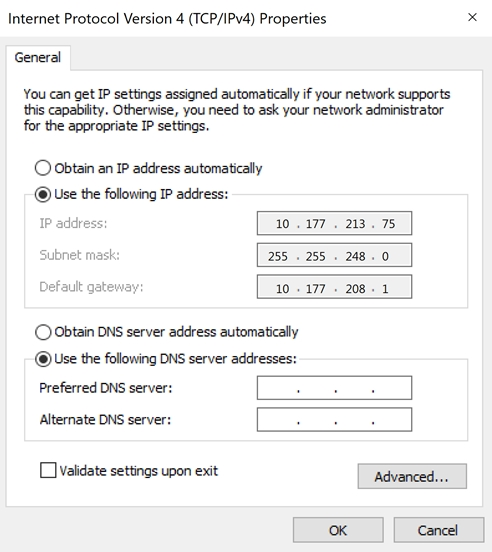
Show answer details
Correct answer: A
- 8
What is the correct description of a Multi-Layer Switch?
Show answer details
Correct answer: A
