NCLEX Requirements by State for Compact and Single-State Boards
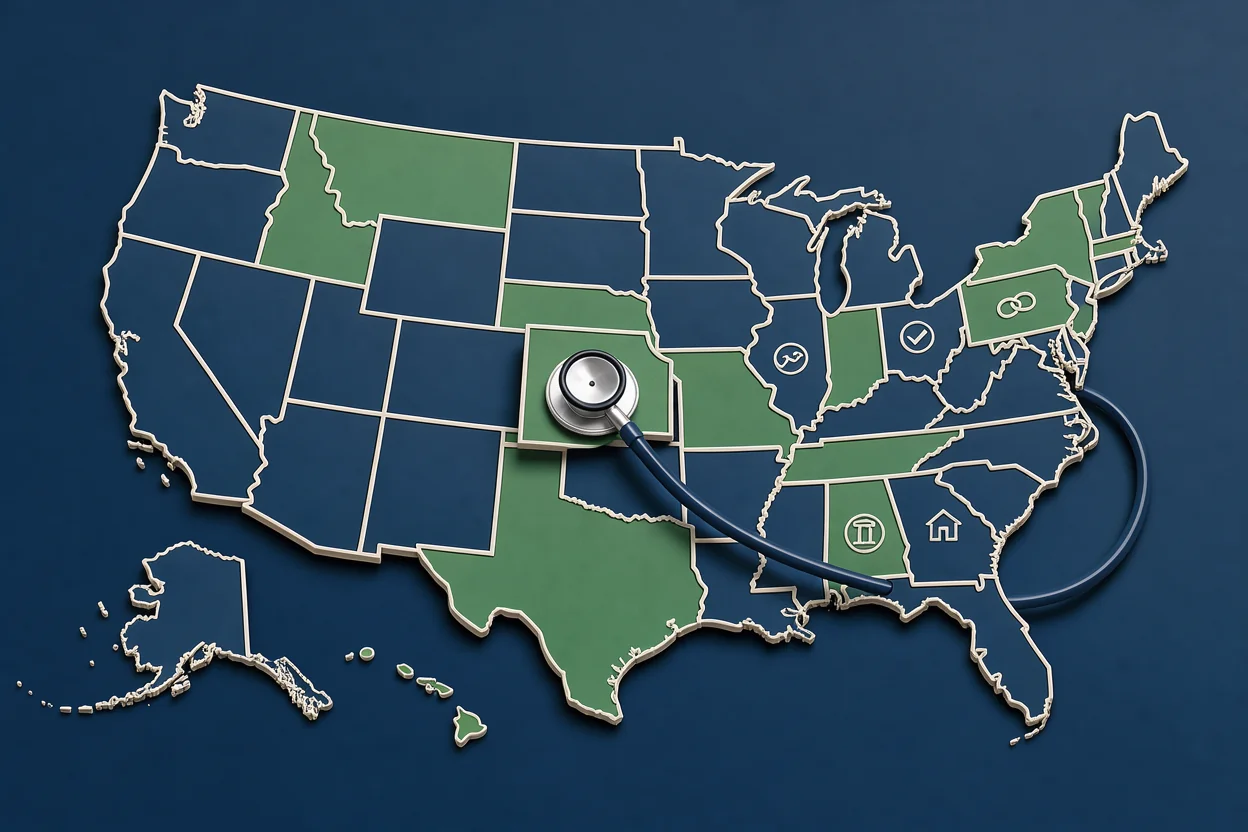
Comparing NCLEX application requirements by state starts with two questions: which nursing board should receive your application, and what license can that board issue you? Compact eligibility adds a residence requirement to that decision. California and New York illustrate the separate-board application path, where candidates must examine each jurisdiction’s licensing requirements individually.
The useful comparison goes beyond where you can take the exam. You need to distinguish education approval, document submission, exam authorization, and permission to practice. These examples focus on registered nurse applications; practical or vocational nursing candidates should use the instructions for their license type.
Compact participation, fees, and filing requirements can change. Confirm current requirements with the board handling your application before ordering documents or paying fees.
Your board application and NCLEX registration serve different purposes
State differences begin with the nursing board’s eligibility review. The NCLEX is a national examination, while individual boards decide whether applicants meet their licensing requirements.
Your board application and exam registration are separate parts of the process. The board reviews your qualifications. The examination administrator handles registration and scheduling. Completing one part does not establish that the other is complete.
An Authorization to Test, usually called an ATT, connects eligibility approval with the ability to schedule your examination. Read its validity dates carefully when it arrives. An application receipt or payment confirmation does not provide the same authorization.
Keep these outcomes separate in your records:
- The board has received your application.
- Required education and supporting documents have arrived.
- Eligibility has been approved and your ATT has been issued.
- You have taken the examination and received a result.
- The board has issued your nursing license.
A test center’s location does not determine which state licenses you. Choose the board based on your intended licensing path, then arrange testing through the examination process.
Also identify whether you need licensure by examination or endorsement. Examination is generally the initial licensing route. If you already hold a nursing license, check the destination board’s endorsement instructions before starting another examination application.
Compact eligibility depends on your primary state of residence
For compact applicants, the central difference is whether their residence and qualifications support a multistate license. Applying to a participating board alone does not establish eligibility.
The Nurse Licensure Compact, often discussed as the enhanced compact or eNLC, distinguishes a home-state multistate license from the privilege to practice in other participating jurisdictions.
Your home state determines the multistate application path
Your primary state of residence is your legal home. A preferred work location, temporary accommodation, or mailing address should not be treated as interchangeable with that declaration.
A candidate seeking multistate licensure must consider both the home-state relationship and the compact’s eligibility requirements. Graduation and examination requirements remain part of the licensing process.
For example, suppose you legally reside in a compact state and intend to work across participating jurisdictions. Your comparison should begin with that home board’s multistate application instructions. Record the residency evidence it accepts and any additional eligibility declarations it requires.
Keep your address and residency statements consistent across your application materials. Ask the board how to resolve a temporary address or planned move before submitting conflicting information.
A compact board can also issue a single-state license
Compact participation describes the jurisdiction. Multistate eligibility describes the applicant.
A person applying to a compact board may need a single-state license because their residence or circumstances do not support multistate issuance. That license and a multistate license carry different practice authority.
When reading an application, identify which license you are requesting. Confirm whether the board evaluates multistate eligibility within the initial application or requires another step.
Compare three routes to an initial license
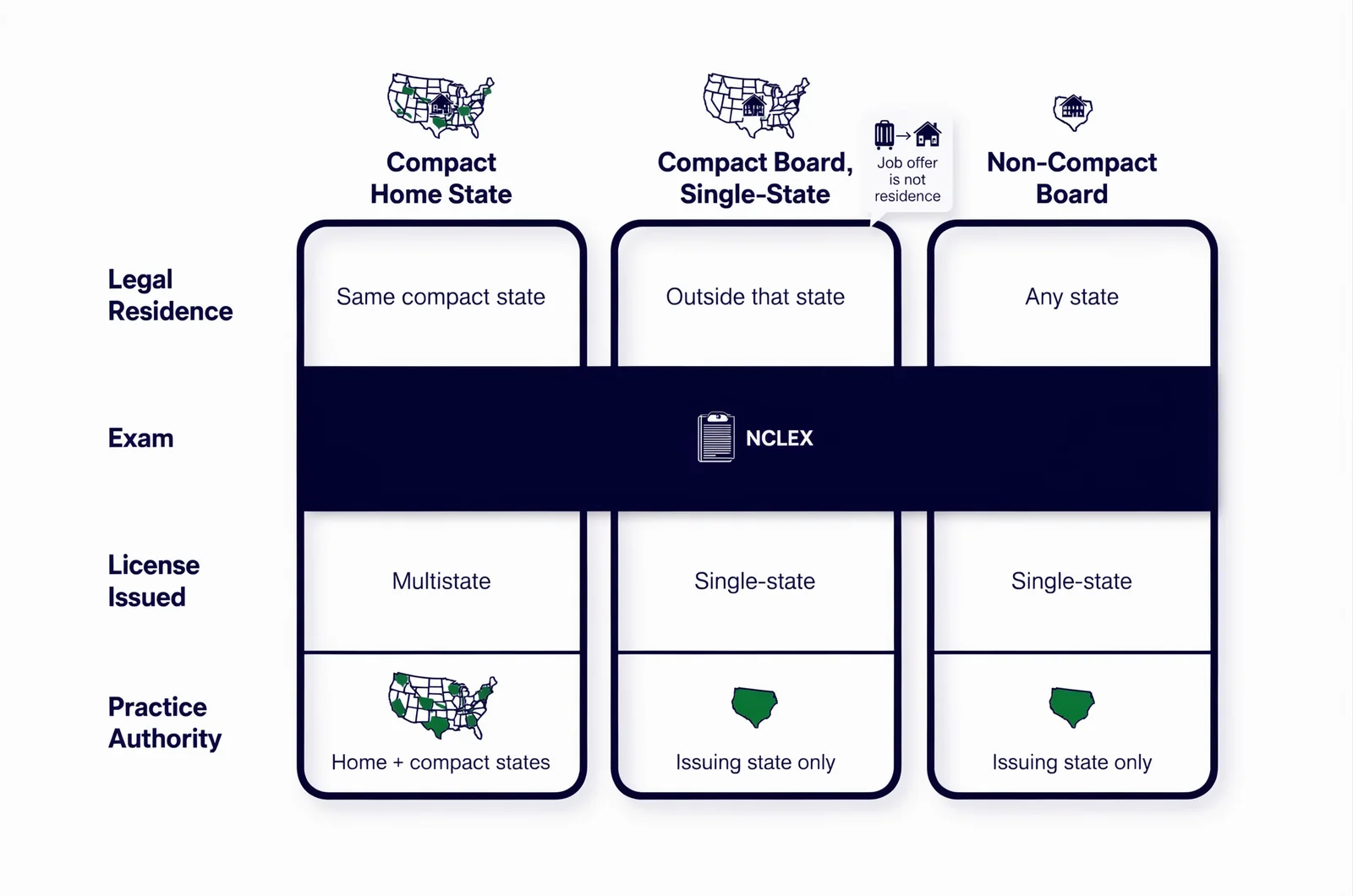
The clearest state comparison separates applicants by residence and intended practice authority. That distinction helps you identify which questions must be settled before submitting documents.
| Application route | Residence question | Practice authority to establish | Application focus |
|---|---|---|---|
| Compact home-state application for multistate licensure | Is this jurisdiction your primary state of residence? | Home-state license with privileges in participating jurisdictions, subject to eligibility | State licensing requirements, residence evidence, and compact eligibility |
| Application to a compact board for single-state licensure | Does your residence support only a single-state application through this board? | Authority under that state’s license | Board eligibility and the appropriate single-state application route |
| Application through a non-compact board | What residence or identification information does this board require? | Authority under that jurisdiction’s license | That board’s education, identity, background, and filing requirements |
The examination requirement can be similar while the resulting practice authority differs. Compare the license you expect to receive alongside the application checklist.
Suppose you live outside the compact and accept a job in a participating state. Applying there does not automatically make that state your legal home. Establish whether you need its single-state license or whether an actual residence change supports another route.
A job advertisement requesting a compact license also does not settle your eligibility. Check the board’s requirements before selecting the license category on your application.
For California and New York, examine each board’s own licensing process. Verify current compact participation separately before relying on cross-state practice privileges.
California and New York require separate application reviews
California and New York are useful comparisons because candidates must examine what each board requires of their particular education and application history. Treat these examples as document-review priorities, rather than a current schedule of fees or processing times.
California: examine education and background submission rules
For a California RN application, start by identifying the education records the board requires and how those records must arrive. A document you can upload yourself may serve a different purpose from a record that must come directly from a school.
If you studied outside the United States, establish how the board wants your education documented before purchasing an evaluation. Check the requested report, submission route, and any supporting academic records.
Review identity and background instructions separately. Confirm whether your location affects the accepted submission method and whether an earlier background check can be used.
The practical question is whether you can assemble the file through the required channels. Write down which items depend on your school, a third party, or your own action.
New York: review the complete licensing checklist
For a New York application, compare the main application with any separate education submissions, required training documentation, and applicant declarations listed for your circumstances.
Distinguish a general application requirement from one that applies only to certain educational backgrounds. If the instructions describe an exemption, establish whether you qualify and how to document it.
Candidates educated internationally should check the required verification route before assuming that a report prepared for another jurisdiction will meet New York’s needs.
Avoid choosing between California and New York solely on application length. A shorter form can still depend on several outside submissions. Compare the complete file, including who sends each record and what remains outstanding.
Compare document rules before paying for submissions
Document handling can create more work than the application form itself. Two boards may request similar evidence while using different submission channels or acceptance rules.
Match every document to its purpose and sender
Build a record for each requirement. Include the document name, who must send it, the accepted method, and how you will confirm receipt.
Compare these categories against your board’s instructions:
- Education records, including whether a final transcript or another completion record is needed.
- Identity information, including name changes that connect older records to your current application.
- Background disclosures and any supporting explanations requested by the board.
- Fingerprinting instructions, where applicable, including the accepted submission method.
- Residency evidence for a multistate application.
- Identification-number requirements and the stage at which they apply.
Separate “requested,” “sent,” and “received.” Those statuses answer different questions. A school’s confirmation that it sent a transcript does not establish that the board has matched it to your file.
Use the same legal name wherever the instructions require it. If your education records use a previous name, check how the board wants that connection documented.
An interactive application checklist could track the selected board, license type, residence, education country, document sender, and receipt status, with a review date for each board requirement.
International education needs its own comparison
Internationally educated applicants should compare education review requirements before selecting a board based on convenience.
Look for instructions covering educational verification, translations, clinical and academic records, and any language evidence applicable to your situation. These are questions to resolve for the selected board, rather than a universal list of mandatory documents.
Check whether the board names an accepted evaluation service or report type. A report’s title and purpose matter; ordering a different product can create another expense.
If your school has closed, changed names, or cannot supply a requested record, ask how the board handles that circumstance before substituting another document. Keep the response with your application records.
A move or a previous attempt can change the right route
Your application path can change when your residence or licensing history changes. Review those circumstances before reusing an older checklist.
For a planned interstate move, distinguish your current legal residence from your expected future residence. Ask the relevant boards how the move affects the application already underway and any multistate eligibility review.
Keep the move date, application date, and license status separate in your records. A pending application and an issued license can require different handling. Confirm any deadlines that apply to your situation directly with the board.
Previous examination attempts also deserve a separate review. Check whether your eligibility remains active, whether the board requires a reapplication, and what examination registration steps must be repeated.
Do not assume another state’s application removes obligations associated with your earlier attempt. If you are considering changing boards, establish how examination history and existing records will be handled.
Keep retake planning distinct from endorsement. A candidate who has failed an examination and a nurse who already holds a license have different starting points.
Finally, confirm that every form matches the examination and license you seek. RN and practical or vocational nursing applications should not be treated as interchangeable.
Questions about applying across state lines
Cross-state applications become easier to understand when testing location, board approval, and practice authority remain separate.
Can I take the NCLEX outside the state receiving my application?
The test center location and the licensing jurisdiction are separate choices. Follow the examination administrator’s scheduling rules and use the authorization associated with your application. Taking the test elsewhere does not change which board reviews your qualifications or issues your license.
Does passing the NCLEX give me a multistate license?
Passing the examination satisfies an examination requirement. Multistate issuance also depends on the appropriate home-state relationship and applicable licensing criteria. Check the license actually issued by the board before assuming you hold multistate practice authority.
Can I send the same documents to two boards?
You may be able to reuse some information, but each board controls what it accepts and how it must arrive. Check direct-submission rules, accepted evaluations, background procedures, and document validity before paying for duplicate submissions or forwarding personal copies.
Which state has the easiest application?
There is no useful universal answer. Your education, residence, licensing history, and intended work location determine the practical fit. Compare the documents you can obtain, the license authority you need, and the correct application route. Treat processing estimates as estimates rather than promised completion dates.
Should I apply to several states before testing?
Identify what each application would accomplish first. Multiple applications can create separate fees and document requests without resolving your primary licensing need. Ask how an initial license and any later endorsement application would support your intended work locations.
Keep exam preparation separate from application tracking
Application progress and examination readiness need separate plans. Waiting for a transcript or eligibility decision does not tell you which clinical topics need more practice.
Maintain an administrative list for submissions, board messages, and authorization dates. Keep another record for practice performance and explanations you need to revisit. That separation helps you use short study windows without repeatedly reopening the entire application file.
During practice, explain why your selected response fits the patient’s findings and why the alternatives fit less well. For case studies, follow how new information changes the clinical decision.
Once your ATT arrives, schedule within its stated validity period and adjust your study calendar around the appointment. Continue checking the board’s application status until the licensing process is complete.
Study clinical judgment for the NCLEX
Click through to browse exams and begin a practice session. Get started → |